Red Light Therapy: Does It Actually Help Recovery?
- Olly
Red light therapy has become increasingly popular in the fitness and wellness world.
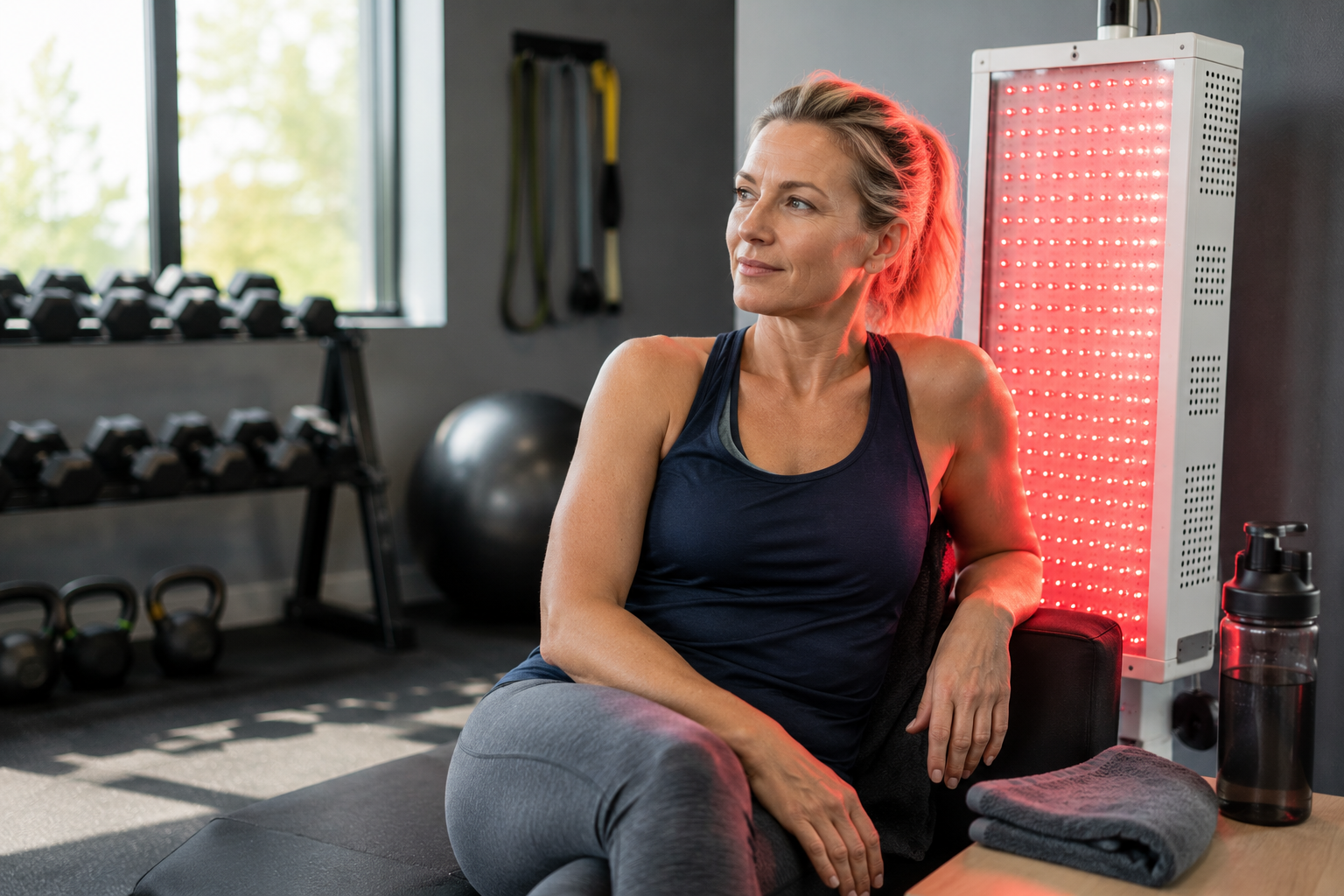
You will now find red light panels and photobiomodulation treatments in gyms, recovery centres and wellness clinics, with claims that they can improve recovery, reduce muscle soreness, support exercise performance and even improve sleep.
But how much of this is supported by research?
The answer is more nuanced than the marketing often suggests.
What is red light therapy?
Red light therapy, also known as photobiomodulation, uses specific wavelengths of red or near infrared light applied to the body.
Researchers have investigated its potential effects on muscle fatigue, exercise performance, soreness and recovery.
The important thing to understand is that photobiomodulation is not one single treatment. Studies have used different wavelengths, doses, treatment times and methods of application, which makes it difficult to apply the results of one study to every red light device available.
What does the evidence show?
There are some promising findings.
Several studies have reported improvements in muscle endurance or recovery following photobiomodulation. A recent meta analysis found potential improvements in muscle endurance and recovery from exercise, although the researchers noted limitations in the available evidence.
Research has also investigated whether photobiomodulation can reduce muscle soreness and fatigue.
However, the evidence is not consistent.
A 2025 systematic review of whole body photobiomodulation identified only five studies involving 105 physically active participants. Some studies reported improvements in sleep quality, but none demonstrated improvements in exercise performance or recovery.
This highlights why it is important to distinguish between targeted treatment and whole body exposure.
What about muscle recovery?
Some research suggests that applying photobiomodulation before exercise may reduce muscle soreness and support certain aspects of recovery.
A 2025 systematic review and meta analysis found low certainty evidence that photobiomodulation applied before exercise reduced muscle soreness and improved muscle performance 24 hours after exercise induced muscle damage.
These findings are interesting, but they do not mean that red light therapy is essential for recovery.
The size of the potential benefit, the best treatment approach and which people are most likely to benefit are still being investigated.
What about pain?
Photobiomodulation has also been studied as a potential treatment for musculoskeletal pain.
A systematic review involving injured athletes found evidence of reduced pain compared with control treatments, but the available studies did not show that photobiomodulation reduced the time required to return to sport.
This again suggests that there may be a useful role for the treatment in certain circumstances without supporting the idea that it is a universal recovery solution.
The problem with the marketing
The biggest issue is that the technology has moved faster than the evidence.
A promising laboratory finding can quickly become a claim that a particular device will transform recovery, improve performance and solve a range of health problems.
That is not what the research currently tells us.
Different devices can use different wavelengths and doses, so it is important to look at the evidence for the specific type of treatment rather than assuming that every red light panel will produce the same result.
Should you consider it?
For someone who already has the fundamentals of training and recovery in place, red light therapy may be an interesting additional option.
However, it should not replace the basics.
If your sleep is poor, your nutrition is inconsistent or your training programme is poorly structured, addressing those areas is likely to have a much greater impact than adding another recovery device.
The bottom line
Red light therapy is a promising area of research, but it is not a magic solution.
There is evidence suggesting potential benefits for certain aspects of muscle soreness, fatigue and exercise performance, but the results vary and whole body treatment has not yet demonstrated clear improvements in exercise recovery or performance.
For now, it makes more sense to view red light therapy as an optional tool rather than a requirement for getting fitter or recovering better.
Get the fundamentals right first, then decide whether additional recovery tools are worth adding to your routine.

Like this post? Share it on social media:
Facebook
Twitter
LinkedIn