
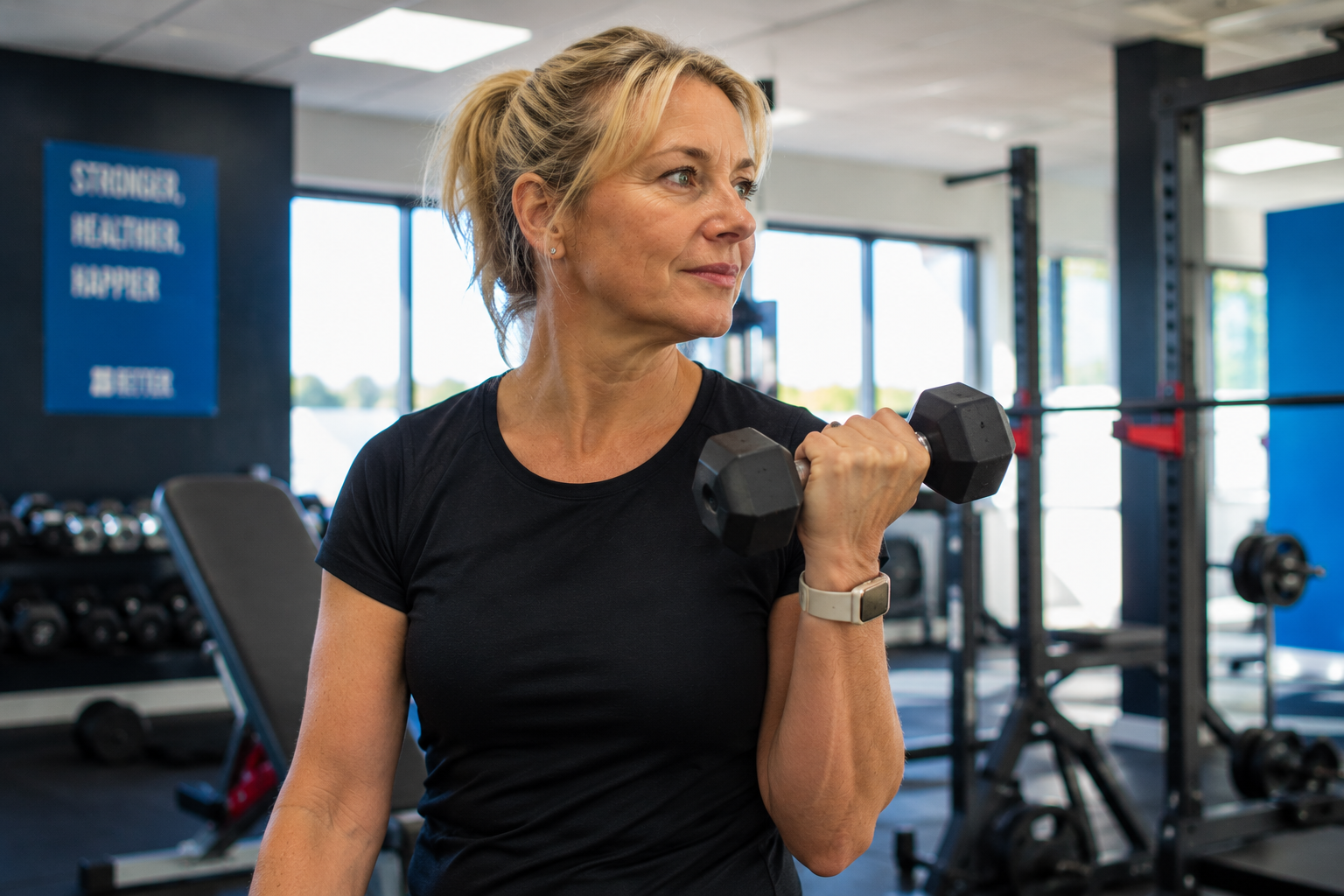
Safe Strength Training for Beginners Starting Later in Life
- Olly
Many people believe strength training is something you need to start when you are young. However, research consistently shows that adults can improve strength, mobility and physical function well into midlife and beyond.
The key is approaching training in a safe and structured way.
Why strength training matters after 40
As we age, muscle mass naturally declines if it is not actively maintained.
This can affect posture, balance, joint stability and overall physical function.
Strength training helps slow or reverse much of this decline while supporting long-term independence and quality of life.
Start with the basics
Beginners do not need advanced exercises or heavy weights.
Learning basic movement patterns such as squats, hinges, pushes, pulls and carries creates a strong foundation.
The emphasis should be on movement quality rather than the amount of weight being lifted.
Progress gradually
The body adapts best when stress is increased gradually.
Trying to progress too quickly often increases the risk of soreness, frustration or injury.
Small improvements repeated consistently produce better long-term results than short bursts of intense effort.
Recovery matters
Recovery becomes increasingly important as we get older.
Adequate sleep, hydration, protein intake and rest between sessions all contribute to progress.
Training hard without supporting recovery often limits results.
Building confidence
One of the biggest benefits of strength training is confidence.
As strength improves, everyday activities become easier and people often feel more capable in all areas of life.
This confidence frequently becomes one of the strongest motivators for staying active.
The bottom line
Strength training is one of the most valuable forms of exercise for adults starting later in life.
By focusing on good technique, gradual progression and consistency, beginners can build strength safely while improving long-term health and physical function.
Like this post? Share it on social media:
Facebook
Twitter
LinkedIn