
Supplements in Midlife: What Helps and What Does Not
- Olly
As people move through their 40s and beyond, supplements often become a bigger focus, particularly around recovery, energy and maintaining muscle mass.
The challenge is that the supplement industry is full of products promising quick results, which can make it difficult to separate useful supplements from unnecessary ones.
The role of supplements
Supplements are designed to support a healthy lifestyle, not replace one.
Training consistency, nutrition quality, sleep and recovery habits still provide the majority of long-term results.
Without these foundations in place, supplements are unlikely to make a meaningful difference.
Supplements that may help
Certain supplements have stronger evidence behind them and can be useful in midlife.
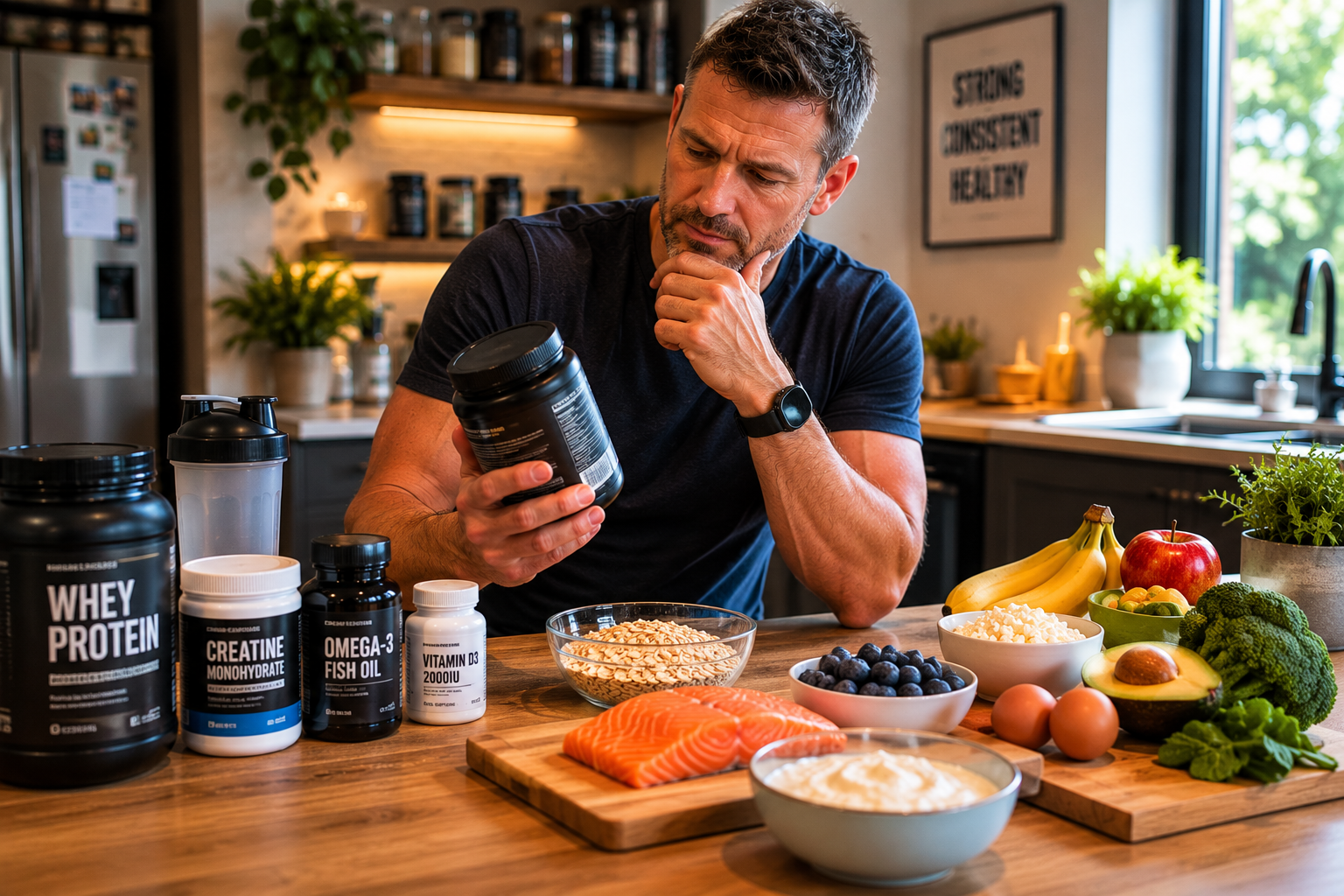
Protein powder can help increase daily protein intake when needed.
Creatine is well researched and may support strength, muscle maintenance and training performance.
Vitamin D may also be beneficial, particularly in the UK where sunlight exposure is limited during parts of the year.
Omega-3 supplements can help support general health for those who rarely consume oily fish.
What often matters less
Many heavily marketed supplements such as fat burners, detox products and metabolism boosters tend to promise more than they deliver.
These products are often marketed around shortcuts rather than sustainable habits.
Long-term progress still depends far more on consistent nutrition, training and recovery.
Keeping things simple
One of the most effective approaches to midlife health is simplifying rather than constantly adding more products or routines.
Focusing on protein intake, movement quality, sleep and recovery will usually provide greater benefits than chasing trends within the supplement industry.
The bottom line
Supplements can support progress, but they cannot replace the habits that matter most.
A strong foundation will always outperform relying on quick fixes or heavily marketed products.
Like this post? Share it on social media:
Facebook
Twitter
LinkedIn