
Joint Care, Mobility and Long Term Movement Health
- Olly
When we talk about healthy ageing, the conversation often focuses on muscle, cardiovascular fitness, nutrition and body weight.
All of these things matter.
But there is another important part of staying healthy as we get older: being able to move well and continue doing the things we enjoy.
That means looking after your joints, maintaining mobility and keeping enough strength to control your body through everyday movements.
This doesn’t require an elaborate mobility programme.
In many cases, the basics are still the most useful place to start.
Why Movement Matters for Your Joints
Our joints are designed to move.
Regular physical activity allows us to use them through different ranges of movement while also challenging the muscles and tissues around them.
Walking, cycling, swimming, strength training and everyday activities all contribute to your overall movement.
This is one reason why becoming increasingly inactive can create a cycle where movement feels harder, so you move less, which can make everyday physical activity feel even more difficult.
Keeping some regular movement in your routine helps you avoid that cycle.
Strength and Joint Health
Strength training isn’t just about building bigger muscles.
It also helps you develop the physical capacity needed for everyday movement.
Think about getting out of a chair, climbing stairs, carrying shopping, lifting something from the floor or getting up after sitting down.
All of these activities require your muscles and joints to work together.
Maintaining strength therefore gives you a greater physical reserve as you get older.
You don’t need to lift extremely heavy weights to benefit.
A well structured programme using an appropriate level of resistance can provide a useful stimulus while allowing you to progress gradually.
Mobility Is More Than Stretching
Mobility and flexibility are often used interchangeably, but they aren’t quite the same thing.
Flexibility is generally associated with the available range of movement.
Mobility involves being able to actively control movement through that range.
For example, being able to reach a position is different from being able to move into and out of that position with control.
This is one reason why strength training can complement mobility work so well.
Rather than simply trying to become more flexible, you are also developing the strength and control required to use the movement you have.
Do You Need a Long Mobility Routine?
Not necessarily.
Mobility work can certainly be useful, particularly if you have a specific restriction or movement goal.
But you don’t need to spend an hour stretching every morning to look after your movement health.
You can incorporate movement into the training you are already doing.
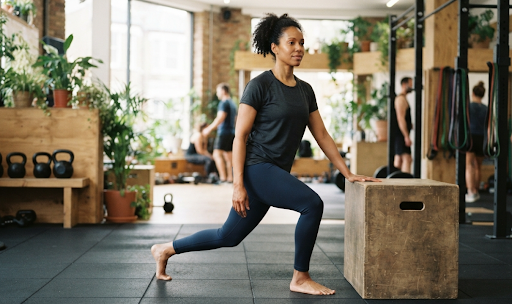
Controlled squats, lunges, presses, rows, hinges and other exercises can all take your body through useful ranges of movement.
Walking regularly and avoiding long periods of uninterrupted sitting can also help you stay active throughout the day.
The best mobility routine is often the one you will actually do consistently.
Don’t Avoid Movement Because You’re Getting Older
It is understandable to become more cautious about movement as you get older.
Previous injuries, stiffness or the fear of causing damage can sometimes lead people to avoid certain movements altogether.
But avoiding movement isn’t always the answer.
Your programme should be appropriate for your current ability, and exercises can be modified when necessary.
The aim is to gradually build your capacity rather than constantly testing your limits.
You might start with a supported squat instead of an unsupported one.
You might use a lighter weight.
You might reduce the range of movement.
Then, as your strength and confidence improve, you can gradually increase the challenge.
Listen to Pain Rather Than Ignoring It
There is an important difference between feeling your muscles work and experiencing pain from an exercise.
If a particular movement repeatedly causes pain, don’t assume that you simply need to push harder.
Change the exercise, reduce the resistance, modify the range or seek advice from an appropriately qualified healthcare professional.
This is particularly important if you have an existing joint condition or an injury.
Training should help you build physical capacity rather than repeatedly aggravating a problem.
Think About Your Future Self
One useful way to think about joint care and mobility is to consider what you want to be able to do later in life.
Do you want to walk comfortably?
Carry your shopping?
Travel without worrying about whether you can manage the stairs?
Get down onto the floor and back up again?
Play with your children or grandchildren?
Continue enjoying your hobbies?
These abilities are easy to take for granted until they become difficult.
Maintaining strength, mobility and regular physical activity gives you a better chance of keeping those options available.
You Don’t Need Perfect Movement
There is a tendency in the fitness industry to talk about perfect posture, perfect technique and perfect movement.
Real life isn’t quite that simple.
Bodies are different.
People have different histories, abilities and limitations.
Good training is not about making every movement look identical.
It is about finding movements that are appropriate for you, performing them with reasonable control and gradually building your capacity.
The Bottom Line
Joint care doesn’t require a complicated routine.
Move regularly. Maintain your strength. Work through comfortable ranges of movement. Adapt your training when necessary.
Most importantly, don’t wait until movement becomes difficult before you start paying attention to it.
The goal isn’t simply to be fit today.
It is to remain capable of moving well for many years to come.
Fitness should fit around your life, and movement should remain part of it.

Like this post? Share it on social media:
Facebook
Twitter
LinkedIn