
Flexibility, Stiffness and How to Stay Pain Free Day to Day
- Olly
Stiffness is something many people begin to notice more as they move through their 30s, 40s and beyond. It can present as tight hips, a stiff lower back, restricted shoulders or a general sense that movement does not feel as easy as it once did.
While this is often attributed to ageing, the underlying cause is usually more related to lifestyle than age itself.
Why stiffness develops
The body adapts to the positions and movements it experiences most frequently. For many people, this means long periods of sitting, limited variation in movement and repetitive daily patterns.
Over time, this leads to reduced joint mobility and a gradual loss of comfort in certain ranges of motion. Muscles and joints become less accustomed to moving freely, which can create the sensation of stiffness.
Understanding flexibility
Flexibility is not simply about stretching muscles as far as possible. It is about having access to controlled, usable range of motion across your joints.
Being flexible without strength or control does not necessarily improve movement quality. The goal is to maintain mobility that supports everyday function and training.
The role of daily movement
One of the most effective ways to reduce stiffness is to increase general movement throughout the day. Regular walking, standing breaks and avoiding long periods of inactivity help maintain circulation and keep joints moving.
These small actions may seem insignificant, but when performed consistently they play a major role in maintaining mobility.
Mobility and strength training
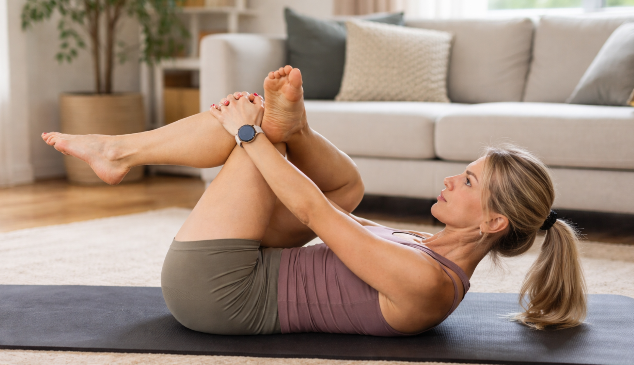
Targeted mobility work can help restore range of motion in areas that become restricted, such as the hips, shoulders and spine. This can include controlled mobility drills, dynamic stretching and gentle movement work.
Strength training also supports flexibility when exercises are performed through a full range of motion. Movements such as squats, lunges and overhead pressing help reinforce both strength and mobility at the same time.
Staying pain free
Staying pain free is not about eliminating all discomfort, but about maintaining a body that moves well and can tolerate everyday demands.
A combination of regular movement, mobility work and strength training creates a balanced approach that supports both flexibility and long-term joint health.
The bottom line
Stiffness is often the result of limited movement rather than an unavoidable part of ageing.
By maintaining regular movement, incorporating simple mobility work and training with good technique, it is possible to stay flexible and move comfortably day to day.

Like this post? Share it on social media:
Facebook
Twitter
LinkedIn