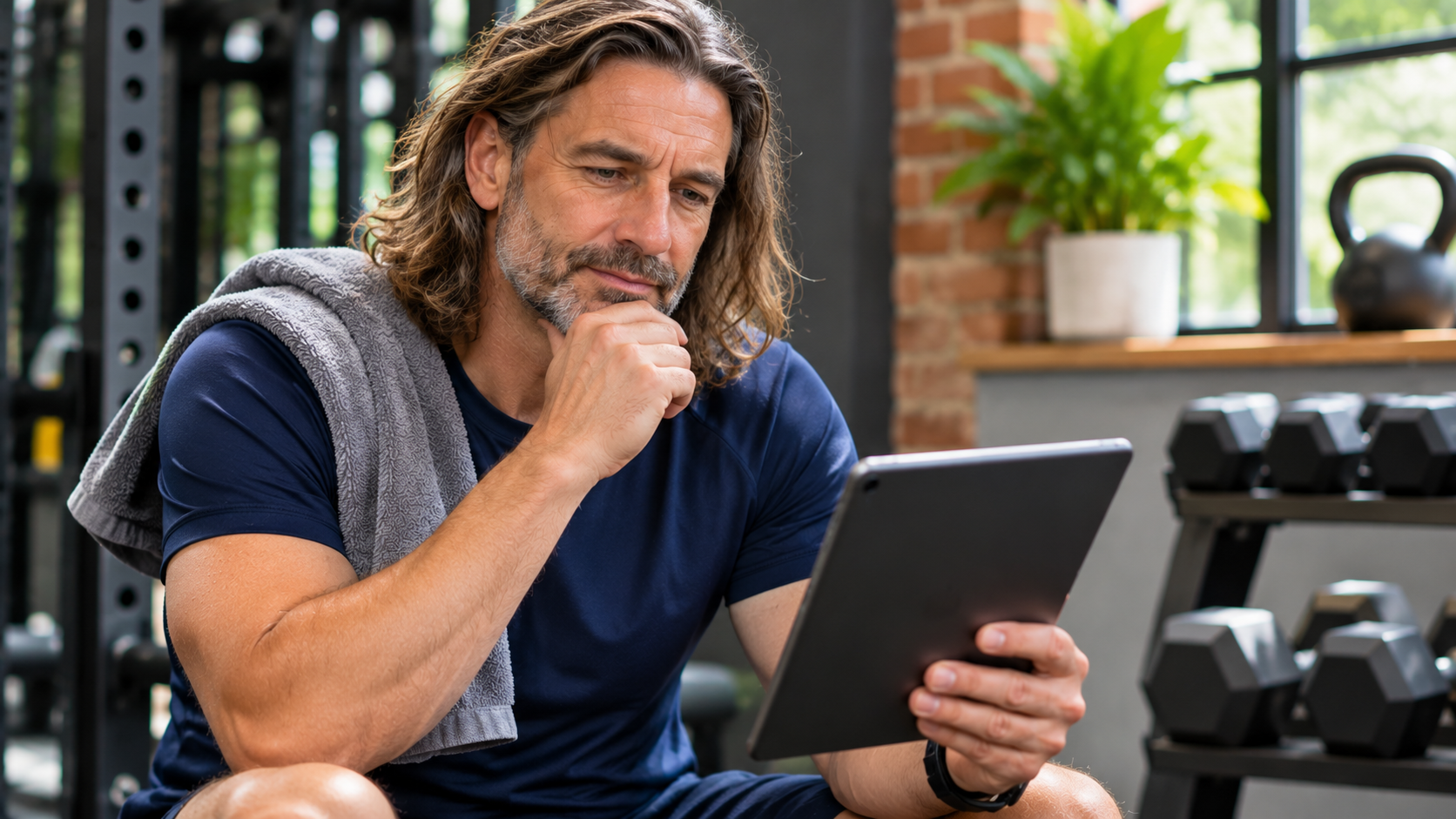
Artificial intelligence is changing the way we approach fitness. You can now ask an AI tool to create a workout, suggest exercises, build a weekly training schedule or even offer nutrition guidance.
And to be fair, some of these tools can be genuinely useful.
But there’s an important difference between having a workout plan and having someone coach you.
A programme might tell you what exercises to do, how many sets to complete and how often to train. Coaching is about understanding the person following that programme.
And that’s where things become a little more complicated.
What AI Can Do Well
AI can be a helpful starting point, particularly if you need ideas or some structure.
It can help you:
- Generate workout ideas based on your available equipment.
- Organise a weekly training schedule.
- Explain exercises and general training principles.
- Suggest ways to structure strength and cardio sessions.
- Keep track of goals and help organise your routine.
For someone who already understands training principles and knows how to exercise safely, these tools can be a useful addition.
But a workout generated in seconds doesn’t necessarily mean it’s the right workout for you.
A Workout Plan Isn’t the Same as Coaching
This is where I believe human coaching still has a very important role.
A good coach looks beyond your age, weight, goals or preferred training days. They consider your experience, health, lifestyle, limitations and how your body responds to exercise.
For example, you might start a programme feeling motivated and ready to push yourself. A few weeks later, work becomes stressful, sleep suffers and your recovery starts to take a hit.
An AI tool might suggest sticking to the original plan or adjusting the workout based on the information you provide.
A good coach can ask the right questions, recognise when something isn’t quite right and help you decide whether to push on, modify the session or take a step back.
That judgement comes from understanding the individual, not simply generating a list of exercises.
The Value of Feedback and Accountability
One of the biggest challenges with exercise isn’t knowing what to do. It’s staying consistent and making the right adjustments along the way.
A coach can observe your technique, offer corrections, monitor your progress and help you work through periods when motivation drops.
They can also challenge you when you’re capable of doing more, while recognising when pushing harder isn’t the best decision.
And let’s not underestimate accountability.
Knowing someone is checking in on your progress can make a real difference to how consistently you follow your programme.
AI can send reminders and track information, but the relationship between a coach and client brings another level of personal interaction and responsibility.
Does That Mean AI Has No Place in Fitness?
Not at all.
I think AI can be a useful supporting tool. It can help people become more informed, organise their training and find answers to general fitness questions.
But it shouldn’t replace professional guidance when someone has specific health concerns, injuries, complex needs or uncertainty about exercising safely.
AI can provide information, but it doesn’t have the full picture of your health, your movement or everything happening in your life.
And it isn’t a substitute for a qualified professional who can assess your individual circumstances.
The best approach may be to use technology where it adds value while recognising where human experience and judgement are still needed.
What Should You Look for in a Good Coach?
Whether you’re working with someone online or face to face, a good coach should do more than hand you a programme.
Look for someone who:
- Takes time to understand your goals and circumstances.
- Builds a programme around your ability and experience.
- Provides feedback and helps you improve your technique.
- Adjusts your training as your needs and progress change.
- Understands the importance of recovery.
- Keeps you accountable without making you feel pressured.
- Has the appropriate knowledge and qualifications for your needs.
You should feel that your programme is built around you, rather than being expected to fit yourself around a generic plan.
The Bottom Line
AI can create a workout. It can offer suggestions, organise your training and help you access information.
But good coaching is about much more than the exercises on a page.
It’s about understanding the individual, recognising when adjustments are needed, providing feedback and helping someone build habits they can sustain.
At ART, we believe fitness should be personal. The right programme isn’t simply the one that looks good on paper. It’s the one that works for you, adapts as you progress and supports your long term health.
Technology can be part of that process, but the human element still matters.